

Soot: How Much is too Much?

Blackstone offers percent soot testing as an optional test above and beyond what we do in the standard analysis. It’s something many of our diesel customers have shown interest in. It can be challenging for people to understand how much soot is a problem and how much is normal, so in this article we’ll shed some light on our testing process and what it can tell you about the health of your engine.

Here’s a brief run-down of how it works. We use an FTIR (Fourier Transform Infrared) spectrometer to measure the  percentage of soot present in an oil sample. Essentially, soot raises the absorption rate of the infrared light spectrum and when an infrared beam is shot through the sample, the rate of absorption is measured and quantified. The lab operator ensures the machine is running properly by performing a series of check standards, including calibrating against a known 2.0% soot sample to ensure accuracy.

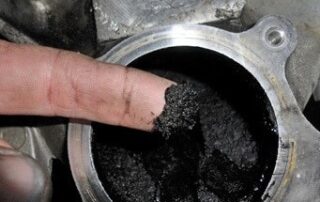
Okay, nap-time is over. So what is soot and what impact can it have on an engine? Soot is a natural by-product of internal combustion. Soot is the reason diesel engine oil turns black, sometimes only after a few miles. When it becomes excessive it can thicken up the viscosity, leave deposits on wearing components, and ultimately clog a filter (or perhaps worse, an oil passage). Excess soot can have an abrasive component and has the ability to stick to wearing surfaces, potentially increasing oil consumption.

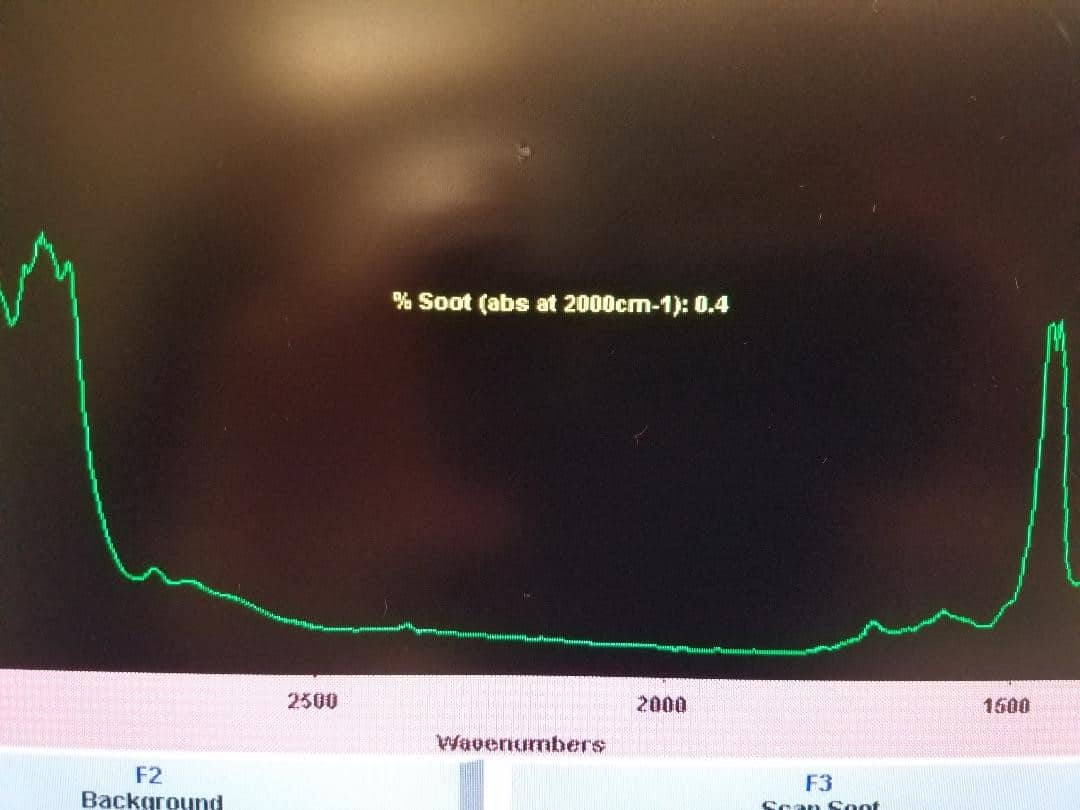
A used sample from a Volkswagen 2.0L TDI. Soot reads at 0.4%.

We like to see soot at 1.0% or less; anything higher than 2.0% to be cautionary. So what does that mean to you? In layman’s terms, excess soot can indicate a combustion problem. Pinpointing that problem (or problems) can be a bit more difficult, but there are a couple fairly simple things to check if you think you’re seeing excess (or just more than normal) soot in the oil. Make sure that the fuel system is maintained and properly calibrated so that the injectors are operating at peak efficiency and with a proper air/fuel ratio. Also check for intake leaks and make sure that the air filter is clean and serviceable. Make sure injection timing is set correctly as well. Change the oil and filter regularly to prevent soot build-up.

It’s always possible that excess soot is due to a mechanical problem too, and that’s obviously a bit more involved than just changing the oil or swapping out a dirty air filter. Excessive ring clearance is a common cause of excess soot. Keep an eye on oil consumption as increases in that area can also show a developing ring problem.

Several of our customers have installed by-pass filtration systems in an effort to keep soot lower and the oil cleaner in general, and that can be effective. Employing an oil analysis regimen can also be helpful in assessing wear metals and other contamination like soot…but as a Blackstone customer, you already knew that!

By |2026-06-05T16:14:26-04:00July 13, 2023|Articles, Gas/Diesel Engine, Lab Tests|Comments Off on Soot: How Much is too Much?

The Silicon Question

In one of the early years of our business, we were visited by a gentleman from another laboratory. I remember him standing in our lobby emphatically stating that the element silicon – when it appears in the spectrometry of oil – has one source and one source only: abrasive dirt.

He was wrong. Many people believe silicon only comes from dirt, but myriad sources of silicon exist. In oil analysis we look at elements rather than molecules, so silicone from harmless sealers and silicon (no “e”) from abrasive contaminants will both read as the elemental form of silicon. We use deductive reasoning to determine whether the silicon is abrasive or not, and sometimes the answer isn’t entirely clear just by looking at the data. In those cases we’ll cover all the bases and talk about the different sources of silicon and offer a variety of suggestions on how to proceed. Some forms of silicon will harm an engine, and others will not.

Harmless silicon

Silicone-based gasket sealers used in engine assembly and repair show up as high silicon in an oil sample. Any oil sample taken from a new, rebuilt, or repaired engine typically reads high in silicon. Oil from some types of new engines may contain as much as 400 ppm silicon. You can ignore the high silicon in these cases since it is harmless and will wash away by the third or fourth oil change.

Certain brands of engine oil and aftermarket oil additives contain silicon as an anti-foaming additive. The oils that use silicon as an additive can use up to 15 ppm of silicon or so, and we’ve seen silicon in aftermarket additives reading up to 850 ppm. It’s always important to let us know what oil brands and additives you’ve used so we can take that into consideration when writing your comments.

Your sampling procedure might introduce some silicon to the oil as well. The silicon might be from dirt around the drain plug or from a dirty collection pan if you’re dipping the sample out of the pan after you drain the oil. We’ve seen silicon read at several hundred ppm from using new plastic tubing or turkey basters to pump/collect samples. Silicon introduced in the sampling process is harmless to the engine internals.

Harmful silicon

Silicon can read high in an oil when coolant seeps into the oil system. It comes from silicon (rust) inhibitors used in the antifreeze. While the inhibitors aren’t necessarily harmful, the antifreeze certainly is, and you will want to seek repairs before the engine is seriously damaged.

Finally, there’s the abrasive form of silicon: dirt. Abrasive contamination causes poor wear in the cylinders, so if you see high silicon and poor cylinder wear, chances are good the silicon is abrasive. Check the air filter: Is it dirty? Installed properly? Check the seals and connections to make sure they’re properly sealed. Check the air box for rodent or insect nests, particularly if the engine hasn’t been started in a while. Look for cracks or leaks in the induction tubing. In aircraft engines, check the carb heat/alt air doors to ensure proper sealing.

Silicon has several possible sources in analysis. The more information we have about recent engine work, oil brands, aftermarket additives, and your sampling procedure, the easier it is for us to work with you to help determine whether the silicon is abrasive and what steps you should take to protect your engine. At Blackstone Laboratories, our analysts consider all these factors when making recommendations to help you prolong your engine’s life. In the end, that’s what it’s all about! 

By |2026-06-05T16:15:30-04:00July 12, 2023|Aircraft, Articles, Gas/Diesel Engine, Industrial, Lab Tests, Marine|Comments Off on The Silicon Question

Do I Need a TBN?

What is a TBN, and who uses it? In short, a TBN (Total Base Number) measures how much base (as in base vs. acid) additive is in the oil to offset the effects of acids coming into the oil from combustion and other sources. Scientifically speaking, the TBN is one of two “neutralization number” tests run on oils. The TAN (Total Acid Number), which is used for hydraulic and gear oil, is the other. The TBN test is useful for anyone who wants to extend their oil use beyond the normal range.

The oil’s function is to lubricate, clean, and cool the engine. Additives are added to the oil to enhance those functions. The TBN will start out reading in the 6.0 to 14.0 range (depending on the oil and whether it’s meant for gas or diesel engines). When you first start using the oil, the TBN tends to drop sharply. Then it levels out and drops more slowly after that. The lower the TBN reading, the less active additive the oil has left. A low TBN test result, meaning very little additive is left, is down around 1.0 or lower.  

The TBN is not the only factor to consider when determining how long an oil can be used. If wear accumulations and insolubles in the oil build up and become abrasive, we would recommend changing out the oil, no matter how high the TBN reading.

We offer a TBN test on any gasoline or diesel oil sample for an additional $10. Note: You do not need to send in a virgin sample for us to run a TBN on your oil. Some people like to know where the TBN starts out in virgin oil, and of course we’re happy to test that for you if you’d like. The cost of a virgin oil sample plus TBN is the same as a regular oil sample plus TBN.

By |2026-06-05T16:15:42-04:00July 12, 2023|Articles, Gas/Diesel Engine, Lab Tests, Marine|Comments Off on Do I Need a TBN?
Go to Top